One source of truth for client data
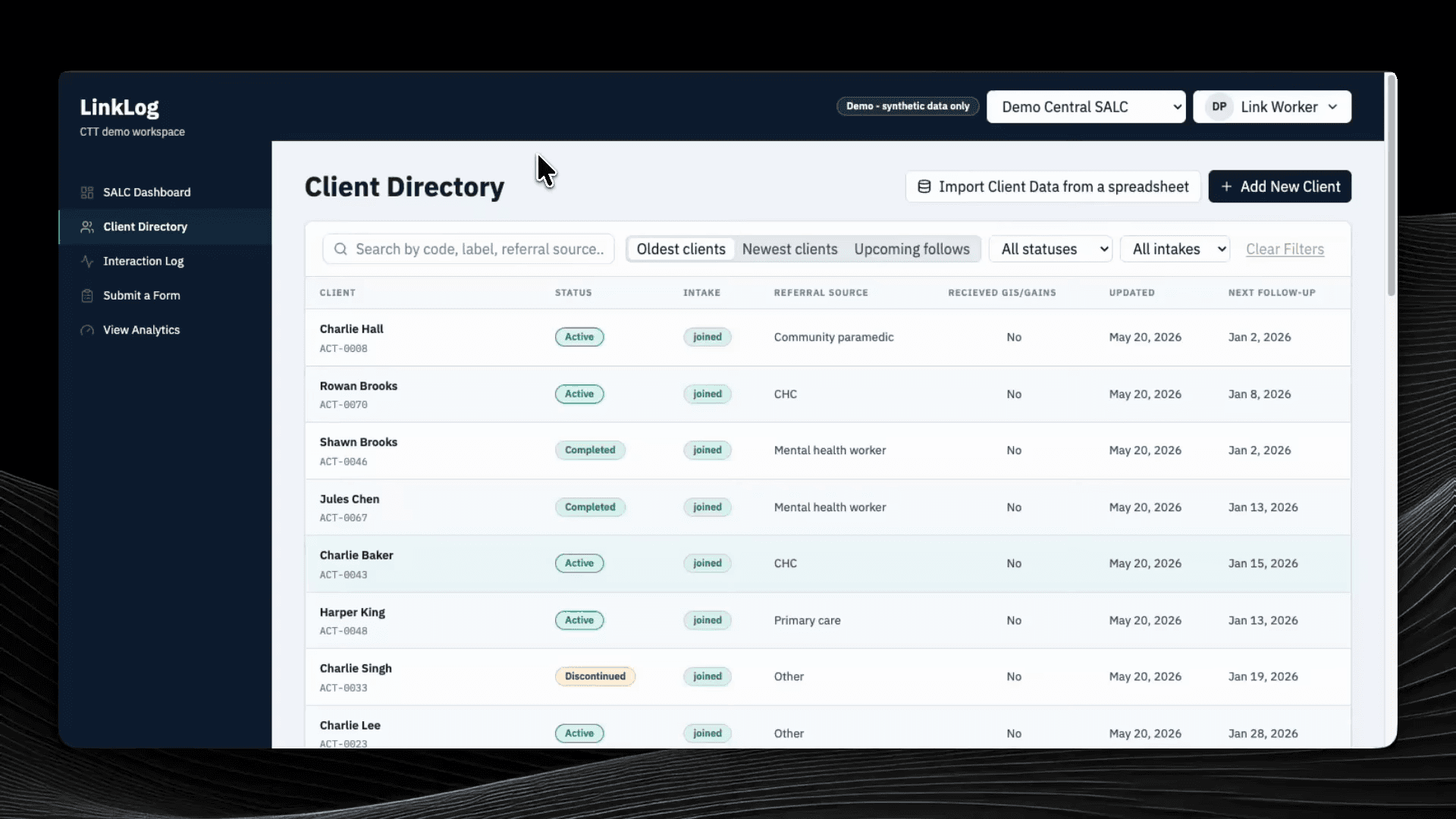
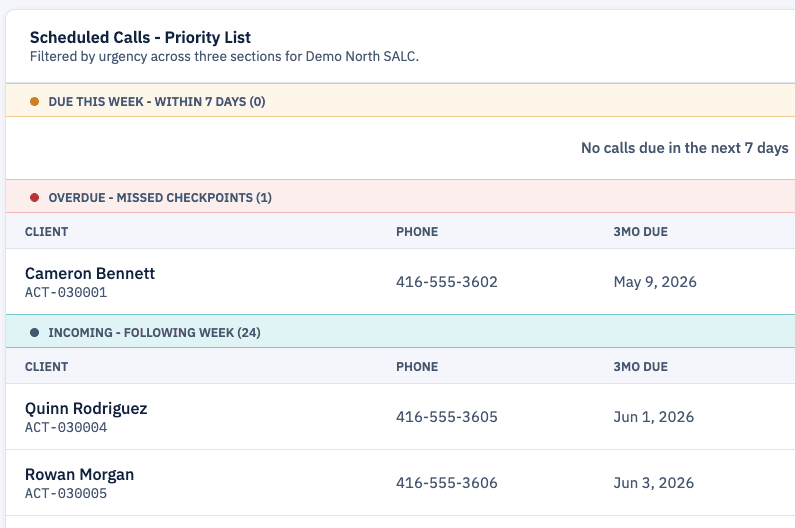
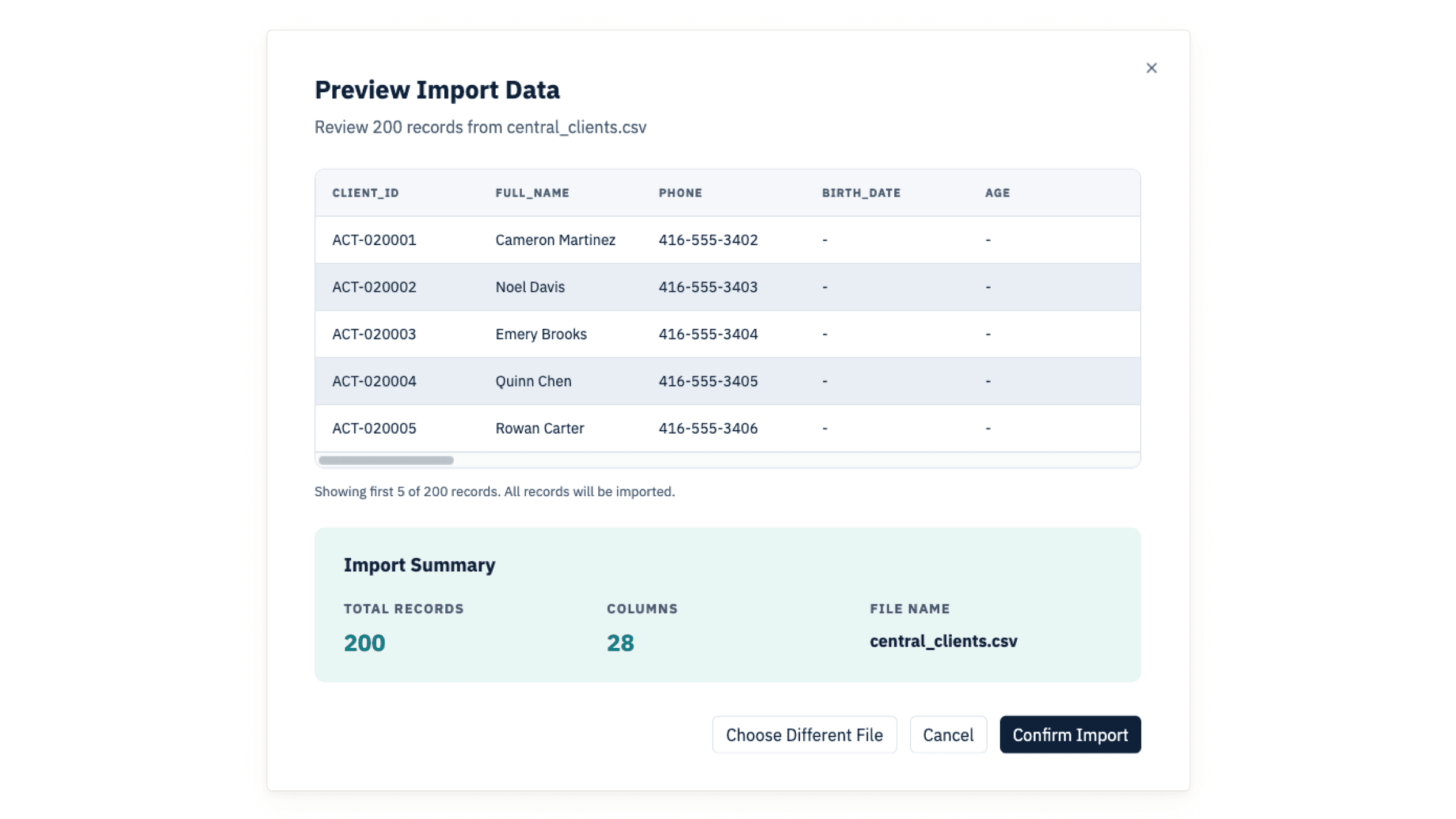
Link workers can import any spreadsheet into a standardized Client Directory, ending the duplicate and manual entry across local files.
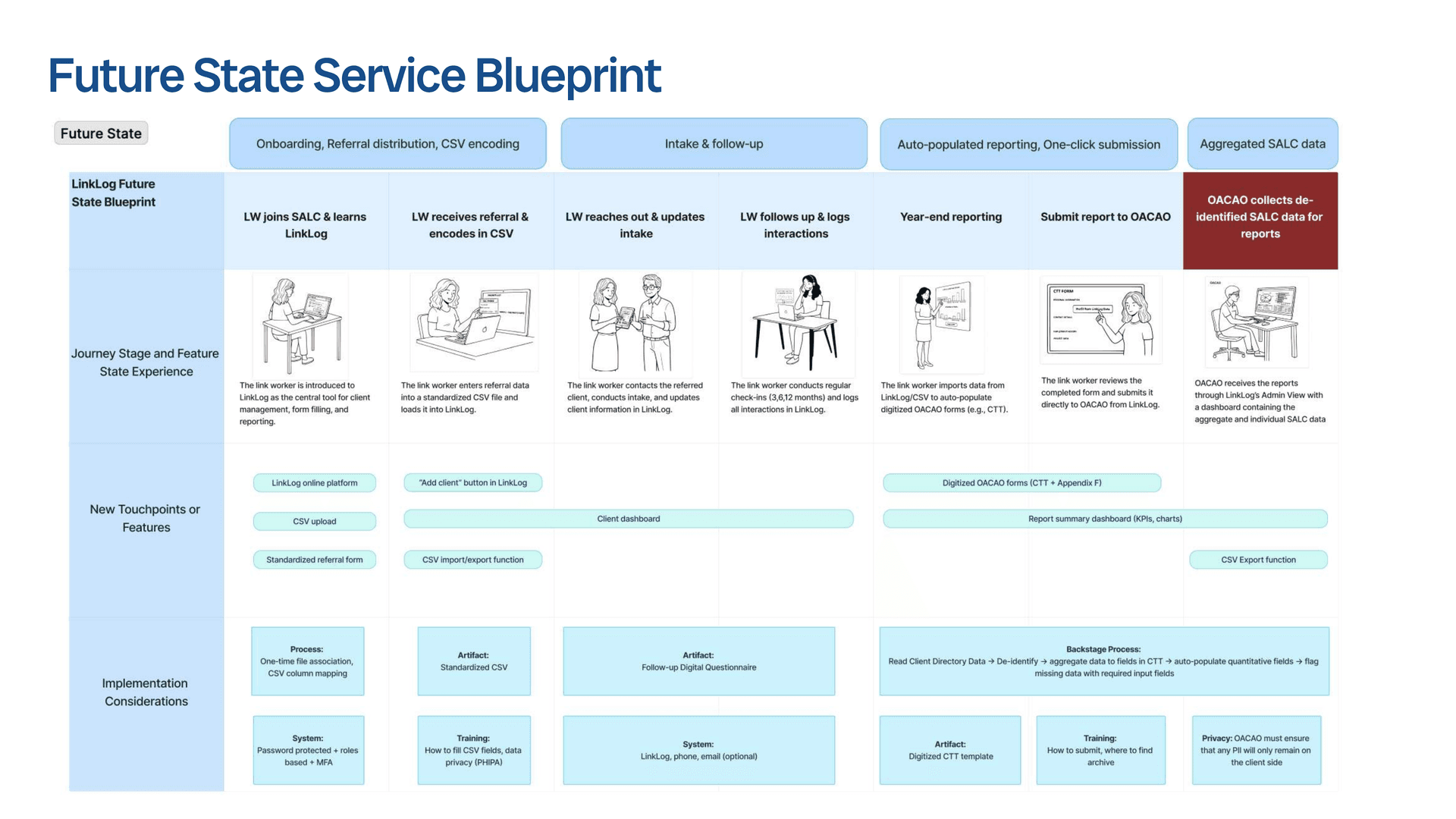
Applying service design concepts, we built a working CRM for older-adult healthcare workers and admin to improve tedious and time-consuming workflows in the service.
I led the actual build, but also assessed the service end-to-end to see where design improvements could be made.
Social prescribing is a structured way to route people from a clinical encounter to non-clinical community supports such as housing, fitness, food security, and social connection.
A Link Worker is the human liason connecting people to the community supports, often working in a SALC.
A SALC is a community centre that provides social prescribing services.
OACAO is the provincial body that funds the centres and collects their year-end data.
In interviews, Link Workers described having to cross-reference paper binders and Excel sheets for patient data, taking days to do the report.
How do we reduce the time spent on the year-end reporting for link workers, while giving OACAO's high quality data for funding grants?
Link workers can import any spreadsheet into a standardized Client Directory, ending the duplicate and manual entry across local files.
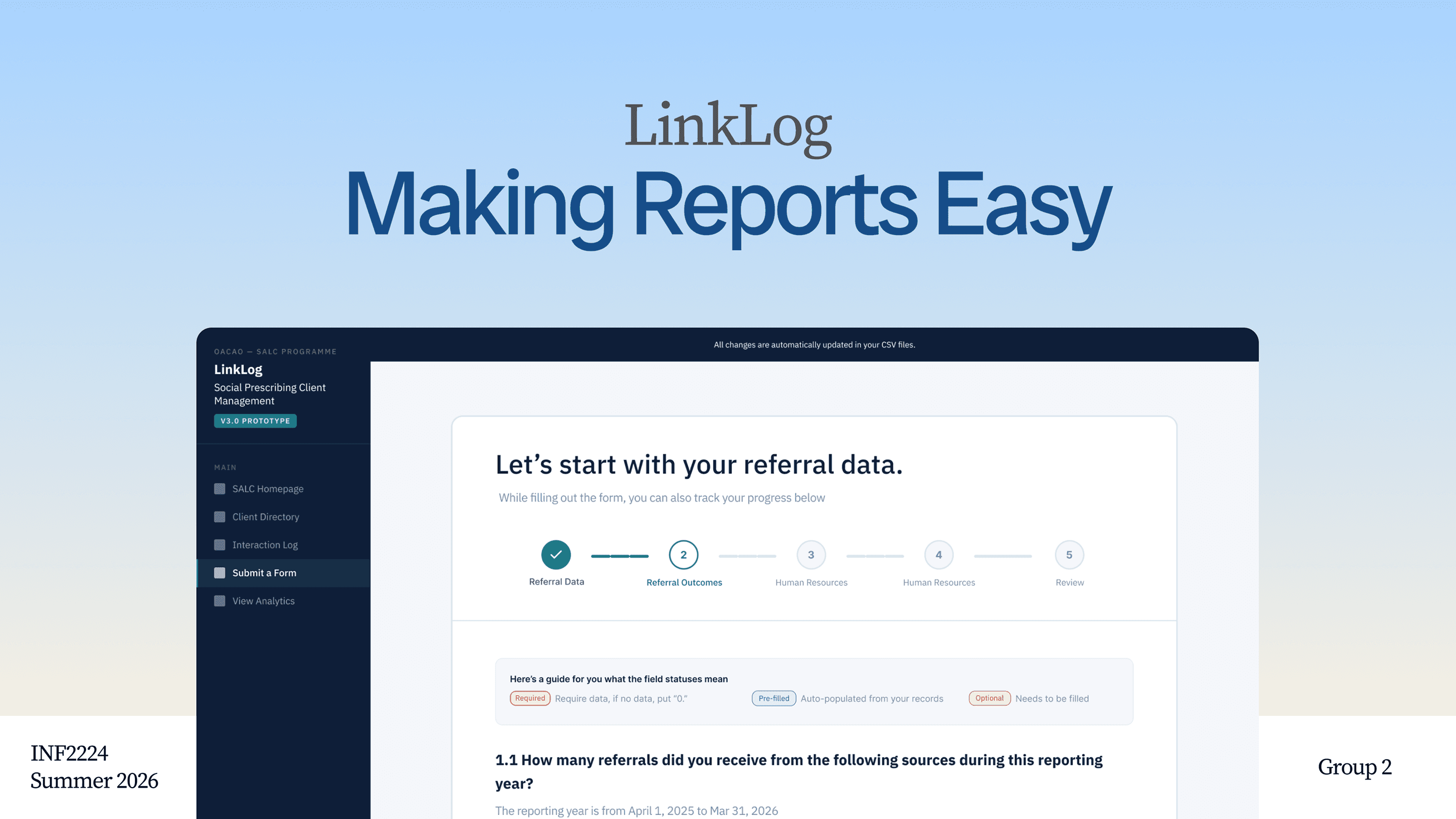
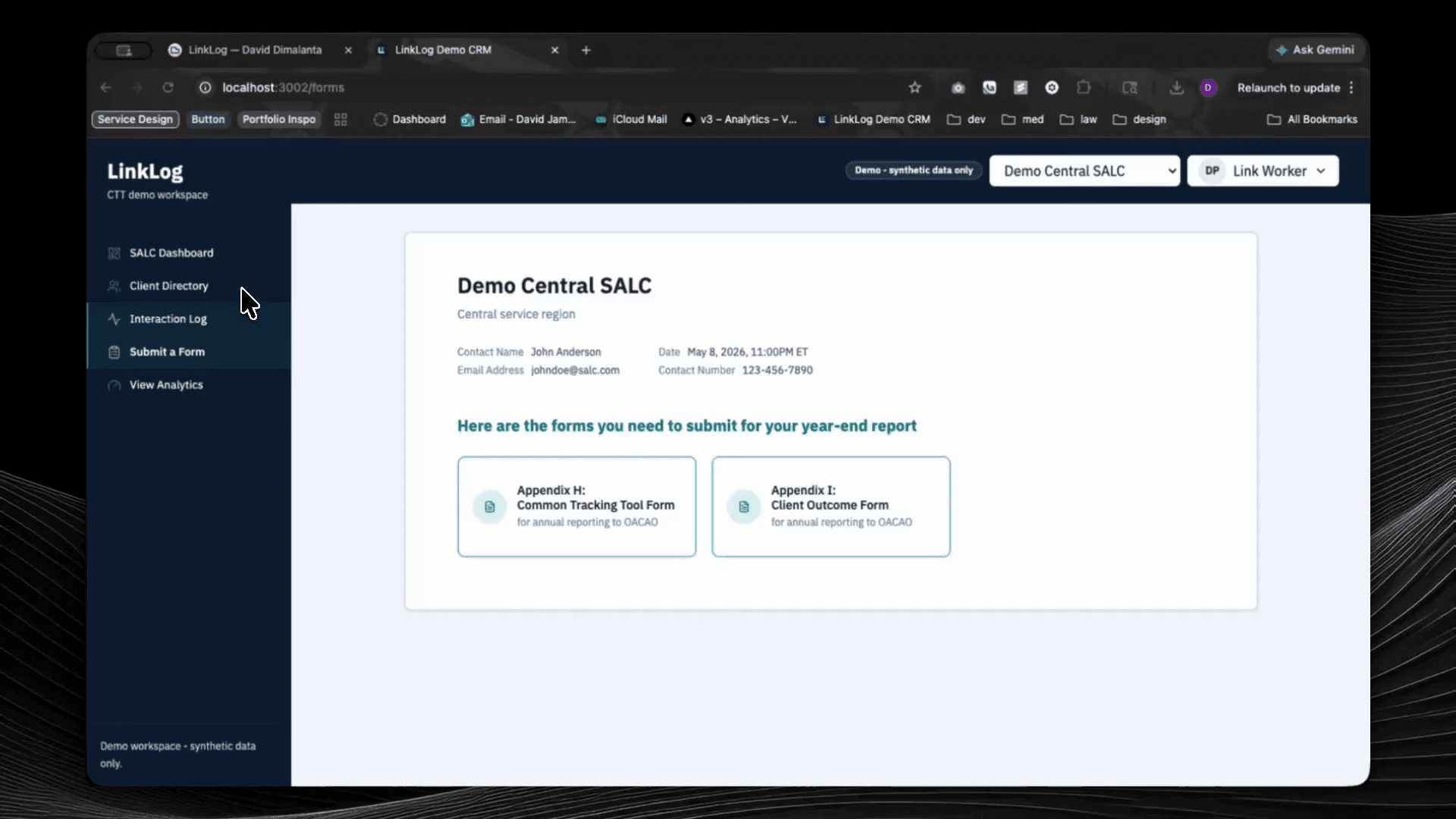
Form fields fill themselves from the Client Directory, so Link Workers go from reconstructing a year of work to reviewing it in minutes.
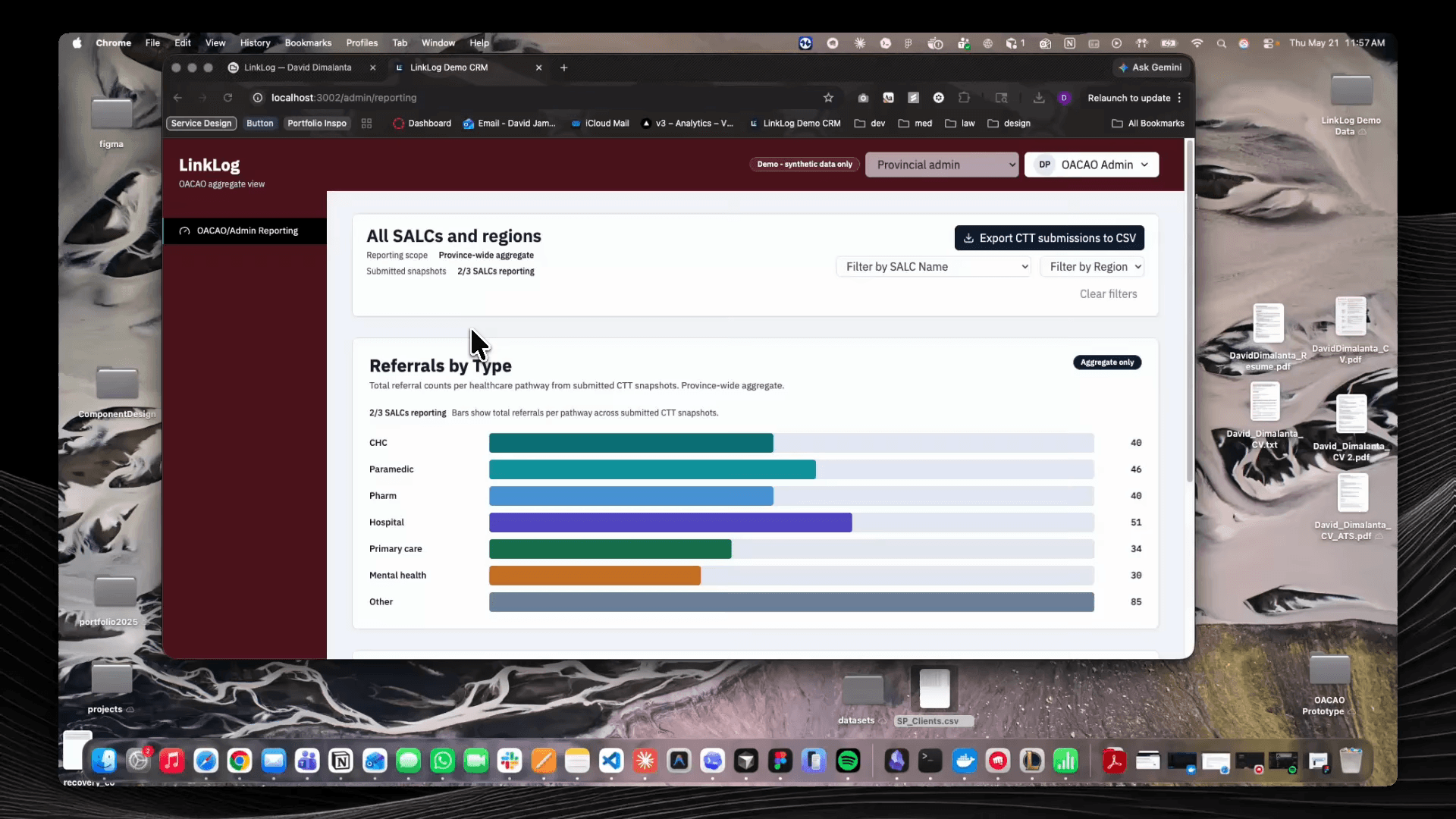
OACAO sees aggregated outcomes across every SALC on the platform; exportable as CSV, viewable as interactive charts, and ready for funding renewals.
Interviewing 10 SALCs, each described a different way of managing clients, but OACAO's year-end report asked for data they didn't keep in one place, or didn't keep at all.
"I don't know if you know all about the reporting process, but it's, it's like a three-day event to try and do the final report."
Personal health information in Ontario is governed by two laws: PHIPA, which regulates how health information custodians collect, use, and disclose patient data, and PIPEDA, Canada's federal private-sector privacy law. Our designs had to comply with both, or OACAO could not proceed with our work.
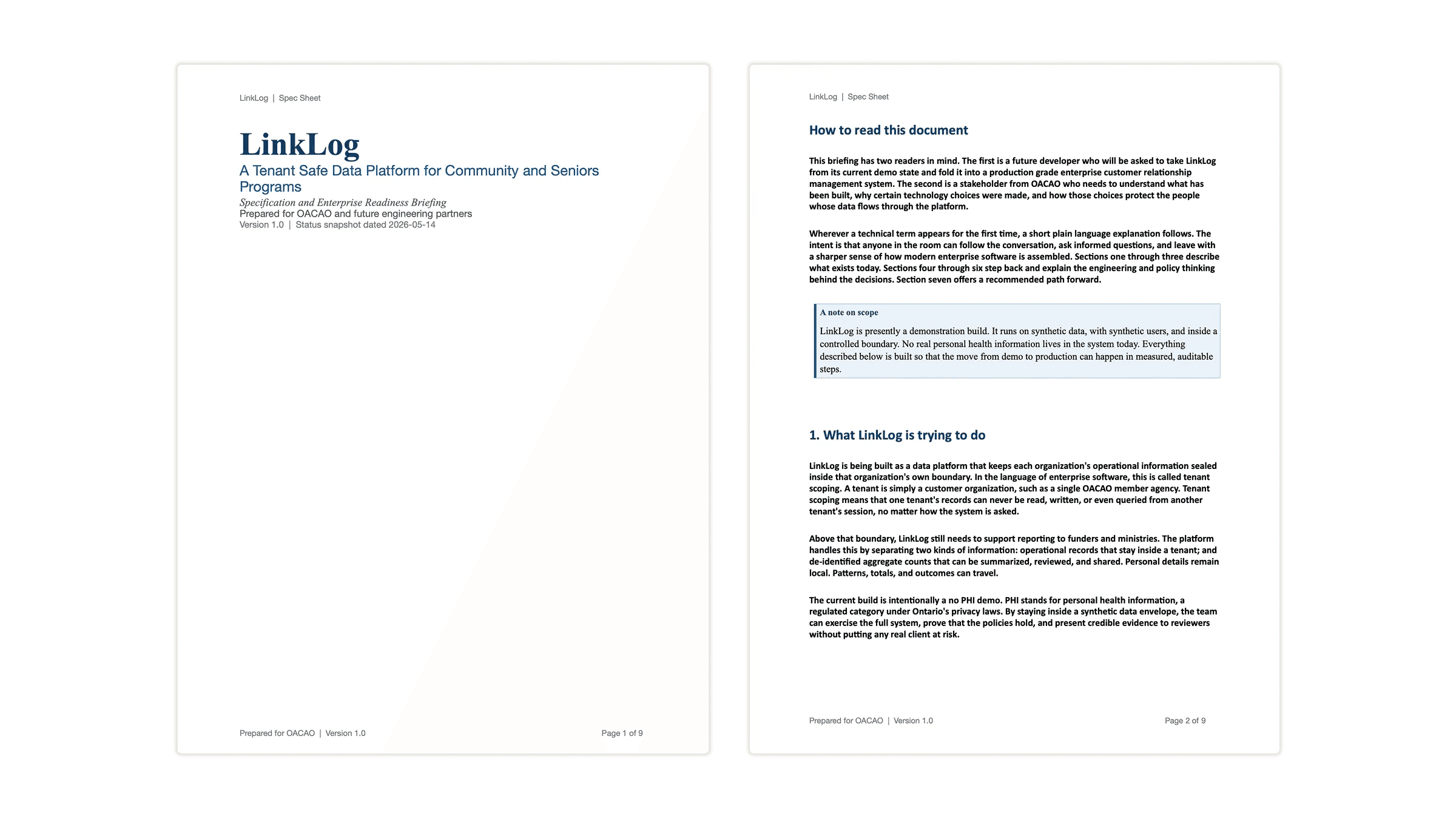
Of all the demos presented (in class), ours was deemed most impactful, ready to implement, and will be piloted in the next fiscal year with 3 SALCs.
Learning to look at problems more wholistically helps me better surface the intent and purpose behind future design desicions. I look forward to taking this mindset to future problems i tackle.
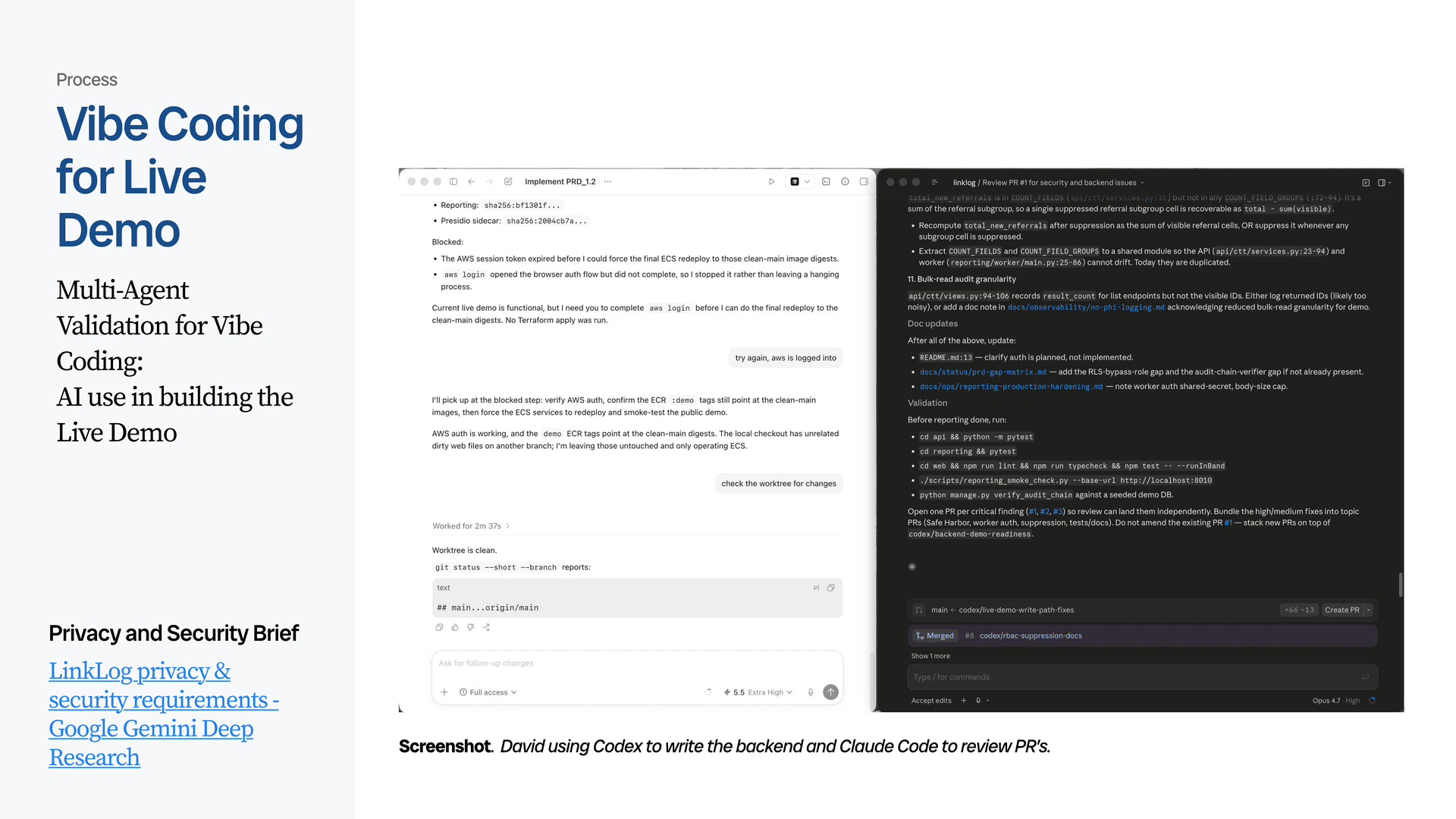
With only six days, we could have stopped at a prototype. However building it with AI meant OACAO could log in and react to something real which led to the conversation of piloting at future SALCs. With restraint and careful execution, I plan on building more, and showing how my design solutions could be implemented in real settings.